Going green used to mean spending more.
That was the trade-off homeowners accepted for years: pay a premium for eco-friendly materials and energy-efficient appliances, and hope to recoup the investment eventually through lower utility bills. It was a hard sell for a lot of people, especially when budgets were tight.
In 2026, that equation has flipped. Sustainable kitchen choices are increasingly the most cost-effective ones over the life of a renovation. Energy-efficient appliances use less electricity. Durable materials last longer and need replacing less often. And in California, a growing list of tax credits, rebates, and incentives makes green upgrades significantly cheaper than they appear on the sticker.
Energy-Efficient Appliances Are the Easy Win
This is the most straightforward upgrade and the one with the fastest payback. Energy Star-certified refrigerators, dishwashers, and ovens use substantially less electricity than their conventional counterparts. The savings are not dramatic on any single monthly bill, but over the 10-to-15-year lifespan of a major appliance, they add up to thousands of dollars.
Induction cooktops deserve special mention. They transfer energy directly to the cookware rather than heating a burner and then the pot, which makes them roughly 85 to 90 percent energy-efficient compared to about 40 percent for gas. That is a massive difference. They also heat faster and cool down almost immediately, which reduces the amount of time energy is being consumed.
For homeowners in San Francisco’s Richmond District, where many homes still run on older gas systems, switching to induction during a kitchen remodeling in the Richmond District is one of the smartest investments available. The upfront cost is offset by lower energy bills, applicable rebates, and the long-term durability of induction technology.
Materials That Last Are Materials That Save
The cheapest kitchen renovation is the one you never have to redo.
That sounds obvious, but the home improvement industry has spent decades encouraging a cycle of renovation and replacement. Trendy materials that look great for three years and then feel dated. Laminate surfaces that chip and peel. Cabinets built from particleboard that warp with humidity.
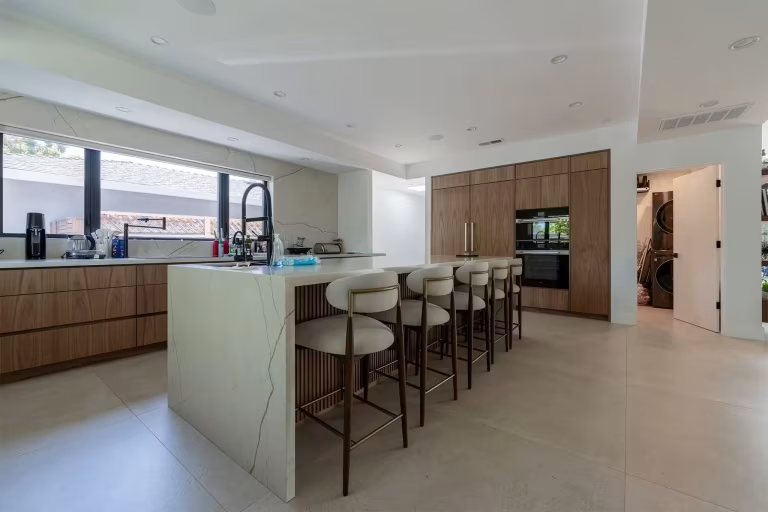
The sustainable approach is to invest in materials that age well and last decades. Solid wood cabinetry, natural stone countertops, ceramic or porcelain tile backsplashes. These materials cost more initially, but they do not need to be replaced every few years, and many of them actually look better as they age. A natural quartzite countertop develops character over time. Solid wood patinas beautifully.
Recycled quartz is another option gaining popularity. It offers the durability and consistency of engineered stone while incorporating recycled content. Several manufacturers now produce countertops made from post-consumer recycled materials, and the quality is indistinguishable from conventional options.
California’s Incentive Landscape
California has some of the most generous green building incentives in the country, and 2026 is a particularly good year to take advantage of them.
The state’s updated building energy codes now require electric-ready construction for major remodel permits. That might sound like an added cost, and it is upfront, but it unlocks eligibility for a stack of federal and state incentives. Federal tax credits for energy-efficient home improvements, combined with California-specific programs like TECH Clean, can offset a significant portion of the cost of heat pump installation, electrical panel upgrades, and induction cooktop purchases.
The incentives are designed to be layered. A single project might qualify for a federal credit, a state rebate, and a local utility incentive simultaneously. Homeowners who work with a contractor familiar with these programs can save thousands.
Water Conservation in the Kitchen
Water is California’s most precious resource, and kitchens use a lot of it.
Low-flow faucets have improved significantly in recent years. Modern aerator technology maintains strong water pressure while reducing actual flow, which means you will not notice a difference in performance. Dishwashers have also become remarkably water-efficient. A full load in a modern Energy Star dishwasher uses less water than washing the same dishes by hand.
Recirculating hot water systems are another upgrade worth considering. They reduce the amount of water wasted while waiting for the tap to heat up, which in older homes with long pipe runs can be substantial.
LED Lighting and the Hidden Savings
Lighting is easy to overlook in a sustainability conversation, but it should not be. A kitchen lit entirely with LED fixtures uses a fraction of the electricity that older halogen or incandescent setups require. LEDs also produce less heat, which reduces the burden on your cooling system during warmer months.
Under-cabinet task lighting, recessed ceiling fixtures, and pendant lights over the island can all be LED.The bulbs last for years, sometimes a decade or more, and the light quality has improved dramatically. Warm-toned LEDs now produce a glow that rivals incandescent without the energy penalty. It is one of those upgrades that pays for itself quickly and quietly.
The Bigger Picture
Green kitchen renovations are not about sacrificing comfort or style for the environment. In 2026, the most sustainable choices also happen to be the most practical and often the most beautiful.
Durable materials. Efficient appliances. Smart energy planning. Thoughtful water and lighting choices. These are simply the hallmarks of a well-designed kitchen. The environmental benefit is a bonus, and the financial savings over time make the decision even easier.
The best part? A green kitchen renovation done right should be the last kitchen renovation you ever need to do. And that might be the greenest choice of all.


